Nathalie Bull acts in reported case on the recognition of unregistered religious marriages
17th March 2026
In MA v WK [2025] EWFC 499, the Family Court (Cusworth J) considered whether Nikkah ceremonies conducted in England but not compliant with the statutory formalities of the Marriage Act 1949 could become valid marriages through subsequent registration in Pakistan. The applications were brought under s.55(1) of the Family Law Act 1986 seeking declarations as to marital status.
Background
Three applicants had each participated in Islamic Nikkah ceremonies in England that did not comply with the formal requirements of the Marriage Act 1949 and were therefore accepted to be “non-qualifying ceremonies.”
- In two cases, the applicants produced evidence that the marriages had later been registered in Pakistan (one apparently shortly after the ceremony; another decades later).
- In the third case, no evidence of registration abroad was provided.
The applicants argued that registration in Pakistan created a valid Pakistani marriage, capable of recognition in England and Wales as a valid foreign marriage.
The Attorney General intervened, opposing that position.
Issue
Whether a non-qualifying religious ceremony conducted in England can become a valid marriage recognisable in English law by virtue of subsequent foreign registration.
Decision
Cusworth J refused the declarations sought. The court held that registration abroad cannot transform a non-qualifying ceremony in England into a valid marriage.
Key Reasoning
- Lex loci celebrationis governs formal validity
The validity of a marriage is determined by the law of the place where the marriage is celebrated. Since the ceremonies took place in England, they had to comply with the Marriage Act 1949. - Non-qualifying ceremonies cannot be retrospectively validated
Because the ceremonies did not comply with statutory requirements, they were non-qualifying ceremonies rather than void marriages. Foreign registration cannot convert them into legally recognised marriages. - Registration does not determine the place of celebration
The applicants’ argument that registration should determine the relevant lex loci was rejected. The court held that the location of the ceremony—not later administrative registration—determines validity. - Recognition of a “recognition” is impermissible
Even if Pakistan recognised the marriages, English courts could not recognise a foreign recognition of something that English law treats as a non-marriage. - Presumption of marriage unavailable
The doctrine of presumption of marriage could not apply because there was positive evidence that the statutory formalities had not been complied with, which displaces the presumption.
Practical Significance
The decision reinforces the Court of Appeal’s approach in Akhter v Khan that religious ceremonies in England which do not comply with statutory formalities remain “non-qualifying ceremonies.”
It confirms that:
- Foreign registration cannot retrospectively validate such ceremonies, and
- Parties who wish their marriage to be recognised in England and Wales must comply with the Marriage Act 1949 at the time of the ceremony.
The judgment is likely to be of continuing relevance in cases involving unregistered religious marriages and cross-border attempts to secure recognition through foreign registration.
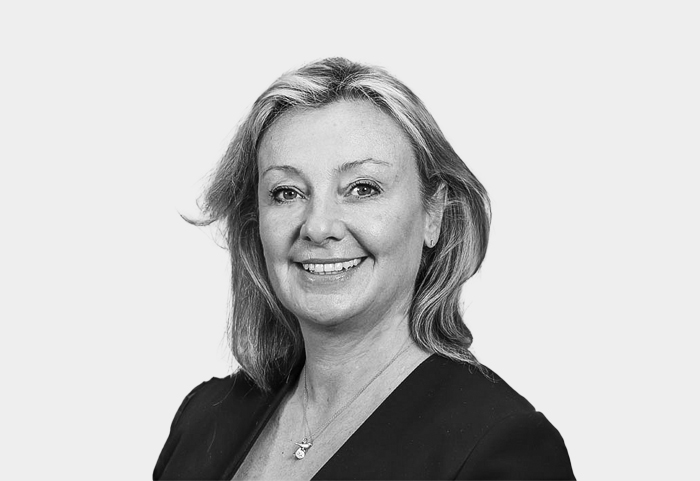
Nathalie Bull (pictured above) represented the third respondent.
Click here to read the judgment.
Nathalie Bull is a senior family law barrister with over 20 years’ experience at the Bar, practising exclusively in family law. Nathalie is ranked in both Chambers and Partners and the Legal 500 directories, who comment that 'She is always well prepared and tough in cross examination. She has an excellent manner with clients, being empathetic while giving sensitive but robust advice.' For more information or to instruct her, please contact her clerk Ian Charlton.
Related News
-
3PB Barristers (3 Paper Buildings) is delighted to welcome Sara Lewis KC as a new member of chambers and its 90-strong Family Law Group, which now boasts seven KC's. Sara was called to the Bar in 1996, took silk in 2021 and joins 3PB today from her former chambers, where she was its last of Head of Chambers until the beginning of 2026. Ranked as a Leading Silk by Legal 500 since she became a...
Continue reading -
Five members of 3PB Barristers’ (3 Paper Buildings) Family Law team have been listed in this year’s Doyle's Guide of the leading Birmingham family law barristers, announced today, 4 March 2026. The list highlights the leading family law barristers practising within Birmingham and the Midlands and is collated through recommendations from solicitors and peers for expertise and abilities within family law. 3PB’s Head of Chambers Elizabeth McGrath KC and Head of Family Vanessa Meachin KC...
Continue reading -
3PB Barristers' (3 Paper Buildings) specialist family law barrister Mark Calway has acted in the Court of Appeal case of Re S (Foster Care or Placement for Adoption) before Justices Lewison, Lewis and Cobb. Mark represented S, a young girl aged 4 years and 8 months, who had been placed in the care of foster parents due to her mother and close family’s inability to look after her. This case concerned an appeal by the...
Continue reading -
3PB Barristers (3 Paper Buildings) specialist Property, Chancery and Matrimonial Finance Barrister Rachel Bale appears as guest on ‘Get Legally Speaking’ podcast discussing Cohabitation and TOLATA issues. Hosted by Hatti Suvari, in this episode Rachel gives some no-nonsense, jargon-free advice about what one can expect when involved in a cohabitation dispute, as well as tips to avoid common mistakes. Rachel and Hatti explore how courts decide property ownership, what evidence matters and how you can...
Continue reading